
In This Article
The Personalization Inflection Point
Rolling out a major CRM update is one of the highest-risk, highest-reward activities in RevOps. Get it right, and you accelerate pipeline velocity. Get it wrong, and you create months of adoption friction and data chaos.
A provocative piece published in Forbes just yesterday makes a startling prediction: financial services is "one popular app away from a dramatic shift in power between institutions and consumers."
The premise? While financial firms race to embed AI into underwriting, fraud detection, and cost-reduction programs, they're overlooking a far bigger disruption: how consumers will use AI against them.
Imagine a £9.99-per-month personal AI finance assistant that monitors accounts 24/7, automatically flags inconsistencies in fees, and generates legally-precise complaints that reference contract clauses and regulatory precedents. Now imagine millions of them, running simultaneously.
This isn't science fiction—it's the near-term future. And it fundamentally changes what personalization means for financial services.
From Personalization Defense to Offense
For years, personalization in financial services meant segmenting clients into buckets and sending slightly different messages to each group. That's no longer sufficient.
The firms that will thrive are those that use AI-driven personalization not just to market effectively, but to serve clients so well that AI advocates have nothing to complain about.
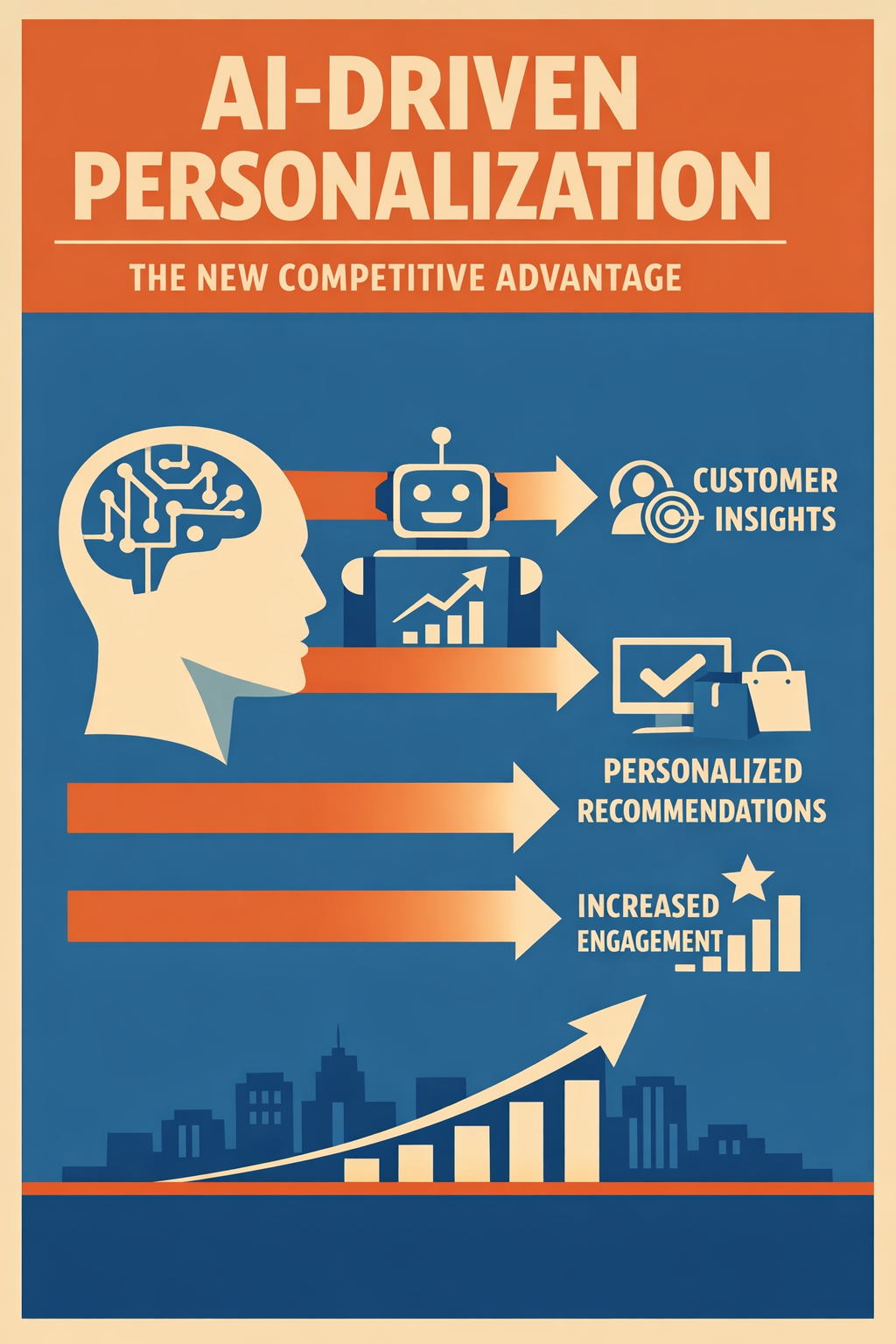
This is personalization as competitive moat:
- Proactive Service: Identify and resolve issues before clients notice them—and certainly before their AI assistants flag them.
- Transparent Pricing: When every fee and term can be automatically analyzed, hidden complexity becomes liability. Simplicity becomes strategy.
- Anticipated Needs: Reach out with relevant solutions before clients think to ask—demonstrating value that justifies the relationship.
- Consistent Experience: Every touchpoint reflects complete understanding of the client. No more "I already told you this" frustration.
What AI-Driven Personalization Actually Looks Like
Predictive Analytics
Moving from reactive to predictive service:
Churn Prediction: AI identifies behavioral patterns that precede client departures—declining engagement, reduced product usage, competitive research—often before the client consciously decides to leave. Early intervention preserves relationships.
Life Event Detection: Changes in spending patterns, address updates, beneficiary modifications—these signals often indicate major life events. AI surfaces them for proactive advisor outreach.
Need Anticipation: Based on life stage, behavior patterns, and peer comparisons, AI predicts what products or services clients will need next—enabling outreach that feels helpful, not salesy.
Risk Monitoring: Behavioral changes can indicate financial stress, fraud exposure, or compliance concerns. AI-driven monitoring enables protective intervention.
Hyper-Personalized Communication
Beyond "Dear [First Name]":
Dynamic Content Assembly: Communications assembled in real-time based on current circumstances. Not template selection from a limited library, but truly individualized messaging.
Optimal Channel Selection: AI learns how each client prefers to communicate—and when. The right message via the wrong channel at the wrong time is the wrong message.
Tone and Style Adaptation: Some clients want detailed analysis. Others want bottom-line summaries. AI adapts communication style to individual preferences.
Timing Intelligence: Send communications when clients are most likely to engage, based on historical behavior patterns—not when it's convenient for the marketing calendar.
Intelligent Advisor Enablement
AI doesn't replace advisors—it amplifies them:
Next-Best-Action Recommendations: Based on client circumstances, relationship history, and successful patterns, AI suggests what the advisor should do next.
Preparation Automation: Before a client meeting, AI assembles relevant context: recent transactions, open service cases, life events, competitive threats, cross-sell opportunities.
Real-Time Coaching: During client interactions, AI can surface relevant information, suggest talking points, and flag compliance considerations.
Administrative Offload: Documentation, follow-up scheduling, routine communications—AI handles the administrative burden so advisors focus on relationship building.
The Data Foundation for AI Personalization
None of this works without the data integration we've discussed throughout this series:
Unified Client Profiles: AI needs the 360-degree view to provide meaningful personalization. Siloed data produces siloed insights.
Real-Time Data Access: Predictive models are only useful if they operate on current data. Yesterday's information yields yesterday's recommendations.
Historical Depth: Pattern recognition requires history. AI that only sees recent data misses the longitudinal trends that reveal true needs.
Quality Data: AI amplifies whatever data you feed it. Bad data produces bad recommendations—at scale and speed.
This is why data integration isn't just an IT project—it's the foundation for AI-enabled competitive advantage.
Ethical AI: Getting It Right
The Bank of England reports that 75% of UK financial firms now use AI. With adoption comes responsibility:
Transparency
Clients deserve to understand when AI influences decisions affecting them:
- What factors did the model consider?
- Why was this recommendation made?
- How can the decision be reviewed?
"Black box" AI creates regulatory risk and erodes trust. Explainable AI is increasingly a requirement, not a nice-to-have.
Bias Mitigation
AI models can perpetuate or amplify historical biases:
- Training data may reflect past discriminatory practices
- Proxy variables can encode protected characteristics
- Feedback loops can reinforce unfair outcomes
Regular bias audits, diverse training data, and human oversight are essential safeguards.
Privacy Protection
Personalization requires data, but data handling requires care:
- Collect only what's needed
- Use data only for stated purposes
- Secure data appropriately
- Delete when no longer necessary
GDPR, CCPA, and emerging regulations make privacy compliance a legal requirement. Ethical practice makes it a trust builder.
Human Oversight
AI assists decisions—it shouldn't make them unilaterally:
- Human review for consequential actions
- Override capabilities when AI recommendations seem wrong
- Continuous monitoring for drift and degradation
- Clear accountability for outcomes
Preparing for the AI-Empowered Client
Back to that Forbes warning: clients with their own AI advocates will interact differently with financial institutions.
Expect More Informed Interactions: Clients will arrive having researched options, compared fees, and identified questions. Advisors must add value beyond information provision.
Expect Higher Standards: AI will flag every inconsistency, every disadvantageous term, every service shortfall. Excellence becomes the baseline.
Expect Speed: AI-assisted clients expect rapid response. Multi-day turnaround for simple requests becomes unacceptable.
Expect Transparency: When clients can analyze every communication, hidden complexity becomes obvious. Straightforward dealing becomes essential.
The firms that prepare for this reality—by using AI to serve clients exceptionally, not just to reduce costs—will build sustainable competitive advantage. Those that don't will find themselves explaining every fee to an army of AI advocates.
Building Your AI Personalization Capability
Near-Term (2026)
- Implement predictive analytics on unified client data
- Deploy AI-assisted content personalization
- Enable real-time next-best-action recommendations
- Establish AI governance and ethics frameworks
Medium-Term (2027-2028)
- Develop AI-to-AI interaction capabilities
- Build proactive service monitoring
- Implement continuous personalization optimization
- Integrate AI across all client touchpoints
Long-Term (2029+)
- Achieve true one-to-one personalization at scale
- Enable predictive service that anticipates needs
- Build competitive moat through AI-enabled service quality
- Lead industry standards for ethical AI deployment
Ready to explore AI-driven personalization for your firm? Vantage Point helps financial services organizations build the data foundation and deploy the AI capabilities that create lasting competitive advantage. Let's talk about your AI strategy.
About Vantage Point
Vantage Point specializes in helping financial institutions design and implement client experience transformation programs using Salesforce Financial Services Cloud. Our team combines deep Salesforce expertise with financial services industry knowledge to deliver measurable improvements in client satisfaction, operational efficiency, and business results.
About the Author
David Cockrum is the founder of Vantage Point and a former COO in the financial services industry. Having navigated complex CRM transformations from both operational and technology perspectives, David brings unique insights into the decision-making, stakeholder management, and execution challenges that financial services firms face during migration.
-
-
- Email: [email protected]
- Phone: (469) 652-7923
- Website: vantagepoint.io
-
About Tierney Burklow
Expert consultant at Vantage Point, specializing in CRM implementations and digital transformation for financial services.